
The Naughty Mystic • Culture, Folklore & Spirituality
I LOVE Sugar Skulls!
I was introduced to sugar skulls when I lived in Colorado and Arizona, and something about them captured my attention. Maybe it was the brilliant colors, the beautiful flowers, the intricate designs, or the way something associated with death could be so full of life. Whatever it was, I was hooked!
But the more I thought about it, the more I realized there was something deeper behind those bright colors and smiling skulls. There was a story of remembrance, cultural tradition, spirituality, and a relationship with our ancestors.
And you know The Naughty Mystic is always curious about what lies beneath the surface. We don't just look at something pretty and walk away. Oh no, darling! We want to know its history, its meaning, its symbolism, and perhaps a little of the magic woven into it.
So let's explore the world of sugar skulls, their Mexican roots, the mythology surrounding death and remembrance, and why these beautiful creations invite us to look at life and death a little differently.
Because sometimes, a skull isn't a symbol of something frightening. Sometimes, it's a colorful reminder that life is precious, love leaves a mark, and remembering those who came before us is its own kind of magic.
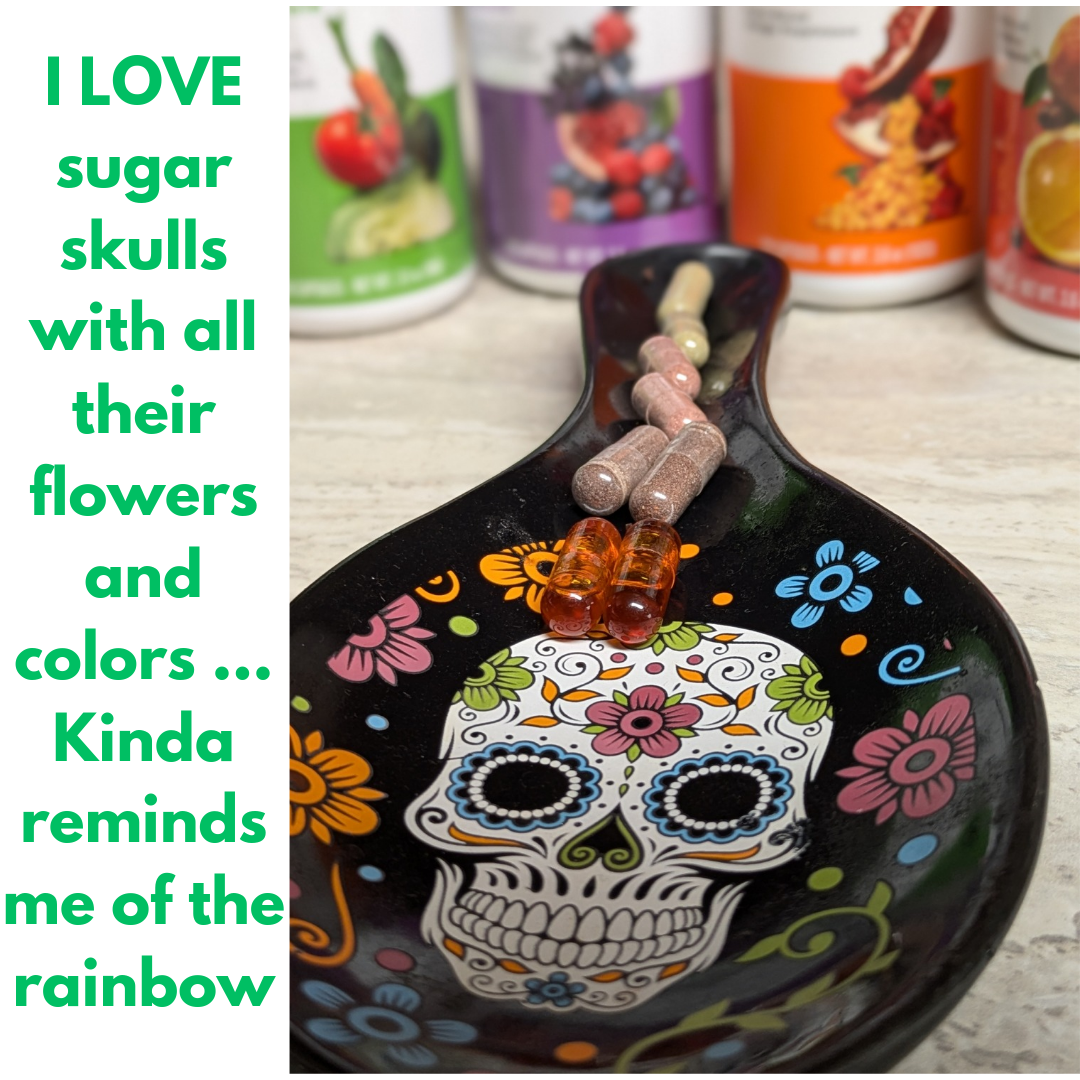
What Exactly Is a Sugar Skull?
Sugar skulls are known in Spanish as calaveras de azúcar, or little sugar skulls. They are traditionally associated with Día de los Muertos, the Day of the Dead, a Mexican celebration honoring family members and friends who have died.
Traditional sugar skulls are made from molded sugar and decorated with colorful icing, flowers, patterns, and sometimes the name of a loved one written across the forehead. They come in different sizes, from tiny decorative skulls to elaborate artistic creations. Some are intended to be eaten, while others are made primarily for display.
But here's where things get interesting: the skull represents death, while the sugar represents the sweetness of life. What a deliciously unexpected combination!
Rather than treating death as something to hide from, sugar skulls invite us to acknowledge our mortality while celebrating the lives we've lived and the people we've loved.
In The Naughty Mystic world, I see a beautiful reminder here: we can hold sorrow and joy at the same time. We can miss someone terribly and still smile when we remember their laugh, their favorite meal, their ridiculous jokes, or the way they made an ordinary Tuesday feel special.
Death is part of the human experience. Love, however, leaves stories behind.
The History: Where Did Sugar Skulls Come From?
To understand sugar skulls, we need to travel back through Mexican history, where Indigenous beliefs about death and the afterlife eventually intertwined with Spanish Catholic traditions.
1. Indigenous Mesoamerican Traditions
Long before the Spanish arrived in the Americas, Indigenous civilizations throughout Mesoamerica, including the Mexica (often called the Aztecs), Maya, and other peoples, had their own beliefs and ceremonies concerning death, ancestors, and the spiritual world.
Death was understood in many of these traditions as part of a larger cycle of existence, although beliefs about the afterlife varied considerably between cultures.
The Mexica honored the dead through ceremonies and offerings. Their religious world included powerful deities associated with death and the underworld. One of these was Mictecacíhuatl, often called the Lady of the Dead, who was associated with Mictlan, the realm of the dead.
These traditions provide important cultural context for understanding why death imagery and the remembrance of ancestors remain significant in Mexican celebrations.
2. The Arrival of the Spanish
During the Spanish conquest and colonization of Mexico in the 16th century, Indigenous religious practices encountered the Catholic traditions brought by the Spanish.
Over time, these traditions blended, resisted one another, and evolved into distinct local customs. Celebrations honoring the dead became associated with the Catholic observances of All Saints' Day on November 1 and All Souls' Day on November 2.
This blending helped shape the modern Día de los Muertos, though the holiday is not identical everywhere in Mexico. Families and communities maintain their own practices, stories, and beliefs.
Sugar skulls as we recognize them today are part of this evolving tradition. It is important to distinguish them from much older Indigenous practices: the modern decorative sugar skull is not simply an unchanged artifact from an ancient civilization.
And that is part of what makes cultural history fascinating. Traditions live, adapt, and gather new meanings as generations carry them forward.
3. The Rise of the Modern Skull Image
In the late 19th and early 20th centuries, Mexican printmaker and illustrator José Guadalupe Posada helped popularize the skeleton imagery now closely associated with Día de los Muertos.
His satirical prints used skeletons to poke fun at politicians, social pretensions, and people who imitated European upper-class fashions. His famous image of La Calavera Catrina became one of Mexico's most recognizable cultural icons.
Posada's work reminds us that skull imagery isn't necessarily meant to be frightening or solemn. It can also challenge authority, expose vanity, and remind us that wealth, status, and fancy clothing cannot make any of us immortal.
Well, there's a little Naughty Mystic attitude for you! Sometimes a skeleton is simply the universe reminding us not to take ourselves quite so seriously.
The Mythology: Gods, Death & the Spirit World
Now let's step into the mythology, because the relationship between the living and the dead has fascinated humanity for thousands of years.
Mictecacíhuatl: The Lady of the Dead
In Mexica mythology, Mictecacíhuatl is associated with Mictlan, the underworld and realm of the dead, where she is linked with Mictlantecuhtli, the lord of that realm.
Mictlan was not simply a place equivalent to the Christian concept of hell. In Mexica cosmology, it was one of the destinations associated with death, and the journey of the deceased could involve a series of challenges.
It is tempting to make Mictecacíhuatl a direct equivalent of every modern death goddess, but that would overlook the distinct worldview from which she comes.
Her story offers a way to explore how different cultures understand mortality, the afterlife, and the mysteries beyond human life. However, sugar skulls should not be described as direct representations of this goddess. Their modern cultural role is broader: they commemorate the deceased and participate in the traditions of Día de los Muertos.
La Catrina: Death Dressed to Impress
You cannot explore Mexican skull imagery without meeting La Catrina!
La Catrina is the elegant skeleton wearing an extravagant hat, often decorated with flowers, feathers, and other elaborate details. Her familiar form developed from Posada's satirical work and was later expanded upon by Mexican artists, including Diego Rivera.
She was originally a social critique, not merely a pretty symbol of the holiday. She challenged the pretensions of people who sought to imitate European aristocracy while distancing themselves from their Mexican roots.
Over time, La Catrina became an enduring symbol of Día de los Muertos and a reminder that death makes no distinction between social classes.
The Naughty Mystic interpretation? You can have the gorgeous hat, the dramatic flowers, the beautiful outfit, and the perfectly applied makeup—but underneath it all, you're still human.
So enjoy the beauty. Play with your personal style. Be a little outrageous. Just remember what matters when the decorations come off.
Do Sugar Skulls Have Magical Powers?
This is where I want to distinguish cultural tradition from personal spiritual interpretation.
Sugar skulls are meaningful within Día de los Muertos, but they are not universally considered magical objects, nor is there one single belief about what they do spiritually.
Some people approach their creation and display as an act of devotion, remembrance, prayer, or connection with family traditions. Others appreciate their artistry and symbolism.
From a broader personal-spiritual perspective, you might choose to see a sugar skull as a reminder of life's cycles, the wisdom of your elders, the impermanence of the physical body, or the love that survives someone's death.
Those are meaningful reflections, but they are personal interpretations rather than universal Mexican teachings.
And honestly? I think there is plenty to contemplate without needing to claim a skull holds supernatural powers.
Why the Flowers and Bright Colors?
The colors are one of the reasons I find sugar skulls so captivating. They are bold, joyful, artistic, and full of personality.
Although specific color meanings vary by artist, family, and tradition, several recurring symbols are worth exploring.
Orange and yellow — Marigolds and remembrance
The marigold, known in Mexico as cempasúchil, is strongly associated with Día de los Muertos. Its vivid color and fragrance are traditionally believed to help guide the spirits of loved ones toward their offerings.
Pink and red — Love, affection, and vitality
These colors often appear in contemporary skull designs. They can evoke love, family bonds, passion, and the vitality of life, although meanings depend on context rather than a fixed universal code.
Blue and purple — Reflection and spirituality
In modern decorative art, these shades may suggest contemplation, mystery, spirituality, or mourning. Treat these as possible artistic associations, not official meanings shared by every Día de los Muertos tradition.
Green — Nature and renewal
Green can evoke plants, growth, and the natural world. For those of us who feel connected to the earth, it can also be a personal reminder of life's continuous cycles.
The flowers, especially marigolds, are not merely decoration in a traditional ofrenda. They can help create a welcoming space for remembering the dead.
And here's something I love about this symbolism: flowers are beautiful partly because they don't last forever. They bloom, open themselves to the world, and eventually return to the earth.
Isn't there a lesson in that?
We don't need to live forever to leave something beautiful behind.
What Is an Ofrenda, and How Do Sugar Skulls Fit In?
An ofrenda is an offering or a dedicated arrangement created to honor deceased loved ones during Día de los Muertos.
It is often arranged at home or in a cemetery and may include photographs, candles, marigolds, food, drinks, personal belongings, and sugar skulls. The details depend on family and regional traditions.
Each object helps tell a story.
- Photographs bring specific people and their memories into focus.
- Candles provide light and may symbolize guidance or welcome.
- Marigolds add color and fragrance and are traditionally associated with guiding spirits.
- Favorite foods and drinks honor the tastes and personalities of the deceased.
- Sugar skulls symbolize the dead and the remembrance of those who have passed.
- Papel picado, the beautiful cut-paper decorations, adds movement, color, and artistry to the space.
The ofrenda is not simply a collection of spooky decorations. It can be a deeply personal expression of family history, love, faith, and cultural identity.
Some families understand the holiday as a time when the spirits of their loved ones return to visit. Others emphasize the act of remembering, celebrating a person's life, and keeping family stories alive.
Either way, the heart of the practice is remembrance.
And for anyone who has lost someone, you can probably understand why a tradition centered on remembering the person's favorite things, telling their stories, and celebrating their life can be so powerful.
Ancestors: The Stories, Roots, and People Who Came Before Us
This is the part that especially resonates with me: the honoring of ancestors.
Whether we think about our ancestors through genealogy, family stories, cultural traditions, or a spiritual worldview, we are connected to people whose lives helped shape the world we inhabit.
They planted gardens. They raised children. They made mistakes. They survived hardships. They fell in love, created things, cooked meals, told stories, and made decisions that affected generations they would never meet.
Some left behind photographs and letters. Others left only a first name, a family recipe, a familiar expression, or a story passed down around a kitchen table.
And sometimes, there are gaps in the story. Not every family history is a happy one, and not everyone feels safe or comfortable honoring every relative.
Remembering our ancestors doesn't require pretending that everyone was wonderful. We can acknowledge the good, learn from the difficult, and decide which patterns we want to carry forward and which ones end with us.
From a Naughty Mystic perspective, this is where ancestry and shadow work can meet.
What strengths did your family pass down? What fears? What traditions still nourish you? What beliefs are you ready to question?
You don't have to adopt a particular spiritual belief to explore those questions.
And if you personally believe in a spiritual connection with ancestors, you may find that quiet reflection, family traditions, or a remembrance ritual gives that relationship a meaningful place in your life.
We honor the past not because it was perfect, but because it is part of the story that brought us here.
Sugar Skulls, Halloween, and Día de los Muertos: Are They the Same?
It's easy to see why people sometimes confuse these celebrations. They occur around the same time of year, and all three can include skulls, skeletons, costumes, or imagery connected to death.
But they have different histories and cultural meanings.
Halloween: A holiday with roots in varied traditions, including the Christian All Hallows' Eve, that has developed into a modern celebration involving costumes, spooky imagery, and trick-or-treating.
Día de los Muertos: A Mexican celebration with Indigenous and Catholic influences that honors deceased loved ones through remembrance, offerings, and family traditions.
Sugar skulls: An art form and symbolic object strongly associated with Día de los Muertos, representing the deceased and the remembrance of those who have passed.
Día de los Muertos is not simply the Mexican version of Halloween. Its traditions have their own cultural roots and significance.
You can certainly appreciate sugar skull art outside the holiday, but learning about its origins helps us appreciate more than the aesthetics. It helps us respect the people, beliefs, and histories that give it meaning.
How Can You Honor the Meaning of Sugar Skulls?
If you're drawn to sugar skulls as I am, there are ways to explore their meaning that go beyond collecting beautiful artwork.
Here are a few ideas inspired by the themes of remembrance, gratitude, and life's cycles. These are personal reflection ideas, not substitutes for the specific religious or cultural practices of Día de los Muertos.
1. Learn a family story.
Ask a relative about someone who came before you. What did that person love? What did they teach? What is a story worth preserving?
2. Make a remembrance space.
You could display a photograph, a flower, or an object that reminds you of someone you miss. If you want to participate in Día de los Muertos itself, take time to learn about ofrenda traditions and how families practice them.
3. Create art with intention.
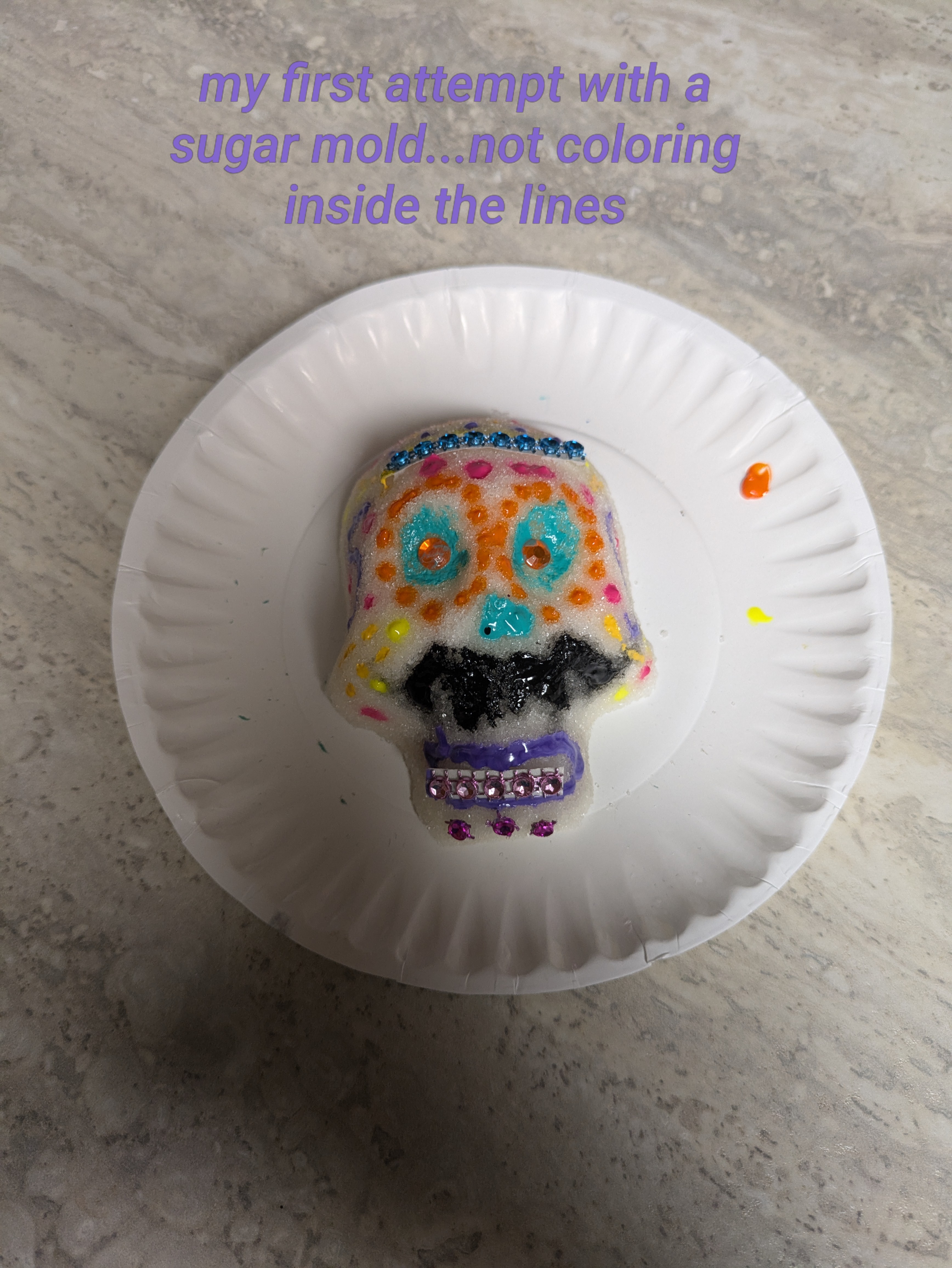
Paint a skull-inspired design or decorate a sugar skull as an artistic exercise. Learn about traditional designs and their context, and consider how your creation can acknowledge its Mexican cultural roots rather than reducing them to a seasonal decoration.
4. Explore your personal history.
Write about the strengths you inherited, the traditions you cherish, and the stories you want future generations to know. You might also reflect on painful patterns you are ready to change.
5. Celebrate the living, too.
Tell someone what they mean to you. Cook a favorite meal together. Take the photograph. Ask the questions while you still can.
We sometimes wait until someone has passed to say all the things we wish we'd said. Why not share a little of that love now?
The Naughty Mystic's Final Thoughts: A Little Death, A Lot of Life
I think part of the reason I fell in love with sugar skulls is that they challenge the way we often think about death.
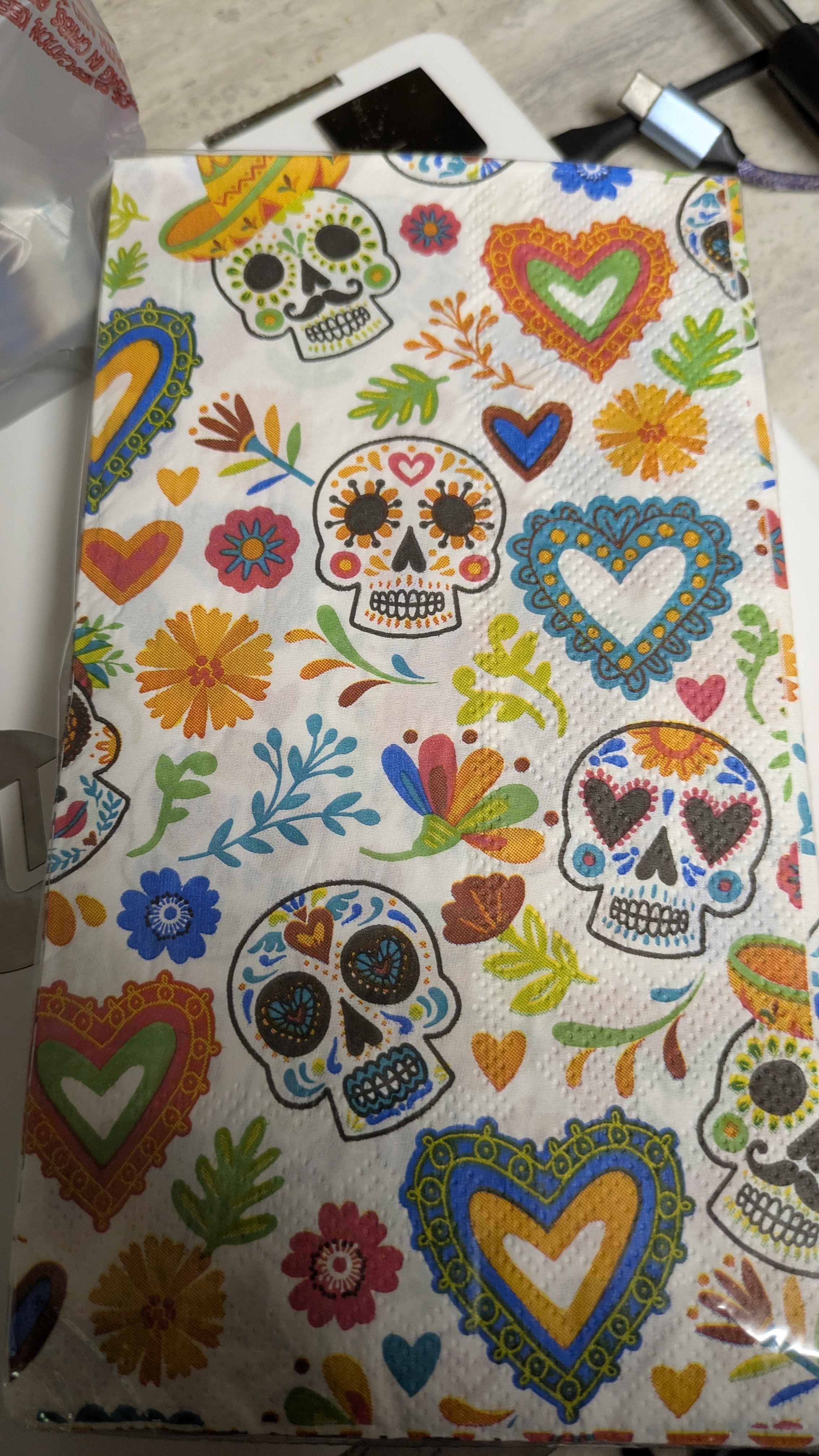
The skull itself is a reminder of our mortality. Yet the flowers, colors, and intricate designs surrounding it invite us to see beauty, creativity, memory, and life.
There is something wonderfully human about that combination.
We know our time here is limited, yet we plant gardens. We paint pictures. We fall in love. We cook meals for people we care about. We tell stories about the people we miss. We create things we hope will outlast us.
And perhaps that is one of the most meaningful ways to think about honoring our ancestors: recognizing that we are part of a story that began long before us and will continue after us.
I don't believe we need to fear every conversation about death. Nor do we need to pretend that grief is always joyful. We can make room for the sadness of loss and the gratitude of having loved someone in the first place.
So, yes, give me the bright colors, the flowers, the artistic details, and the smiling skulls!
But give me the history, too. Give me the mythology, the cultural traditions, the stories of those who came before us, and the reminder to live this life while we're here.
Because the sweetest lesson of a sugar skull might be this:
Life is temporary. Love is worth celebrating. Remembering is an act of care. And there is beauty to be found even when we look directly at our own mortality.
Now, that's the kind of magic I can get behind.
With a little mischief, a little mystery, and a whole lot of color,
The Naughty Mystic